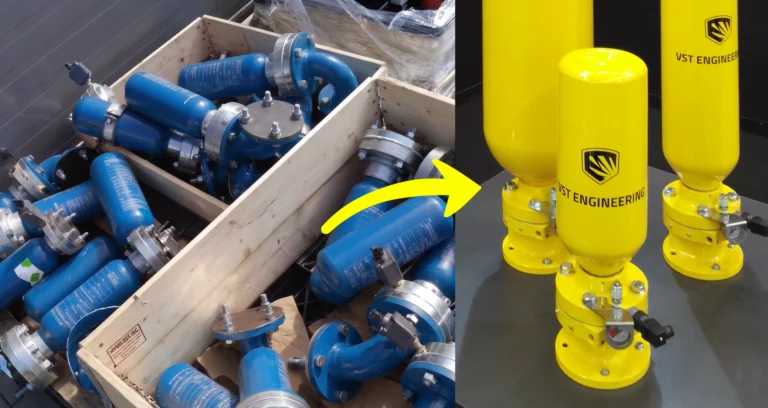
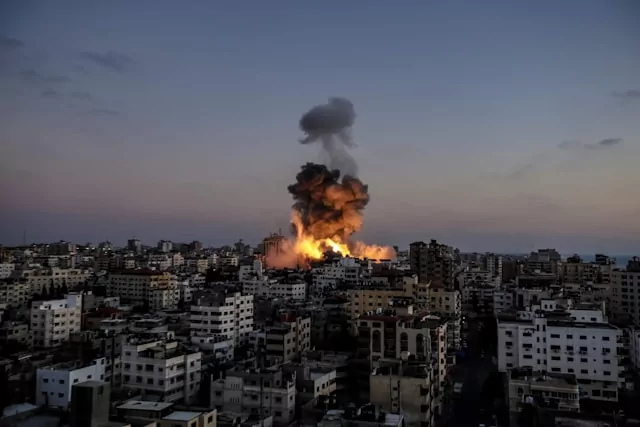
What is an explosion?
An explosion is a rapid deflagration characterised by an increase in temperature and pressure within an enclosure. An explosion can occur when an explosive atmosphere meets with a source capable of igniting it. And that exactly happens in almost all industries…
Is your industrial process exposed to dust explosion risk?
If you process, handle or storage small particles, the answer is YES. The following substances create explosible dust when mixed with air: coal, lignite, sulfur, carbon, resin, biomass, cereal and related products, sugar, dry milk, bone and meat powder, fodder mixtures, plastic materials, metal dust (aluminum, magnesium, titanium, zinc, and their alloys), and other similar materials.
If such dust/air mixture is contained and ignited it shall explode. The most frequent ignition sources include sparks of mechanical origin, hot surface, flame and electrostatic discharge. Some ignition sources cannot be excluded from the process and some only with great difficulties and costs.
Is it possible to eliminate the explosion hazard in your process?
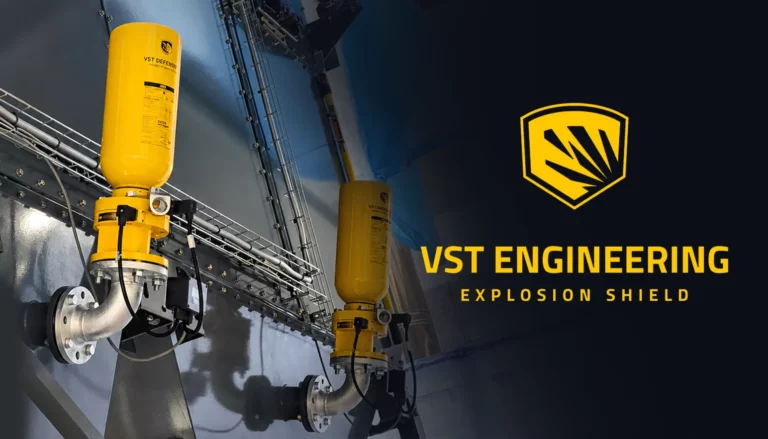
Certainly YES. It is the sole purpose of our SAFETY SYSTEMS. All our systems are designed, produced, tested, installed and serviced by us, VST ENGINEERING. All relevant certifications are in place, i.e. all systems are ATEX Certified and NFPA Compliant.
Let us help you protect your people, property and brand name by embracing the dust explosion risk in a highly professional, sophisticated, yet economic way.
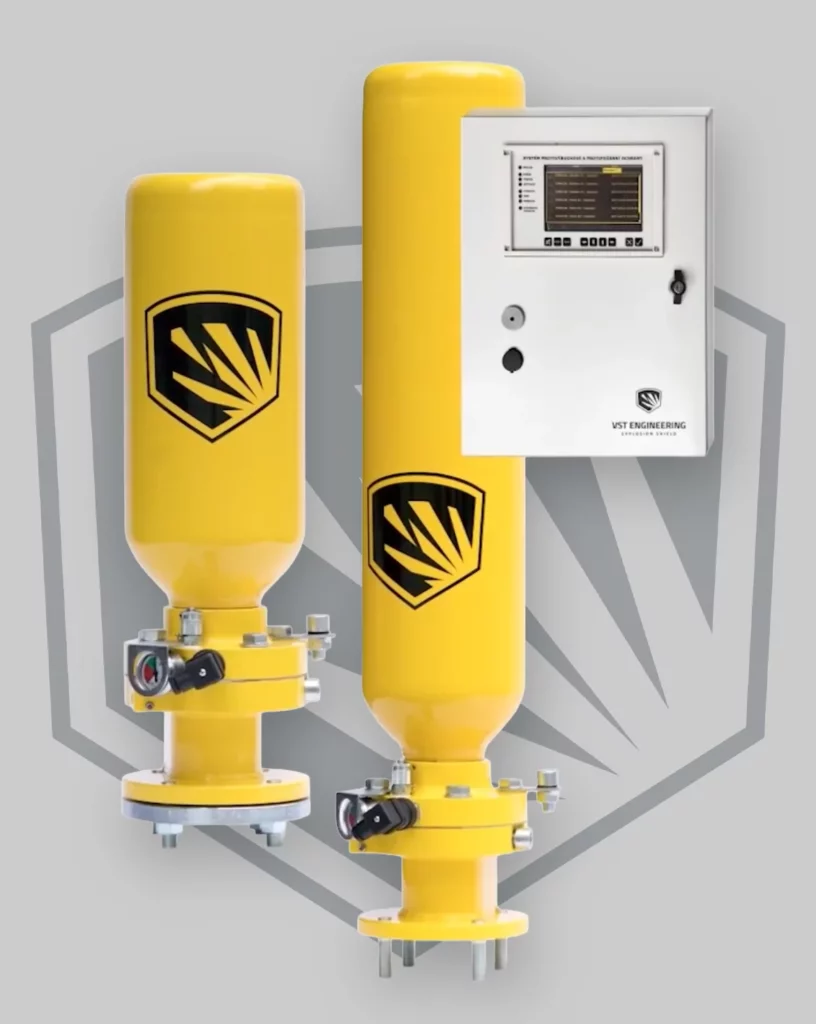
VST provides dust explosion protection for all industrial operations
Dust explosion is a real risk in almost every industry where dust (or substances with a notable proportion of dust) are stored, transported, processed, or otherwise handled. Dust explosion protection is essential not only to prevent property damage but also to protect the health and lives of employees and to maintain a company's good reputation.
VST systems protect assets, lives and brand names.
Typical operations with a high dust explosion risk include heating plants, power stations, mills, sugar refineries, compound feed production, silos, plastics or furniture manufacturing, and powder coating plants. Also operations or processes with mechanical and pneumatic conveying, material crushing and grinding, drying or mixing, dust aspiration or separation, and dust storage or the storage of substances with a high dust content.
Do typowych obiektów o podwyższonym ryzyku należą ciepłownie, elektrownie, młyny, cukrownie, wytwórnie pasz, silosy magazynowe, zakłady przetwórstwa tworzyw sztucznych, fabryki mebli czy lakiernie proszkowe. Zwiększone zagrożenie występuje również w węzłach technologicznych obejmujących transport mechaniczny i pneumatyczny, rozdrabnianie, mielenie, suszenie, mieszanie, odpylanie i aspirację oraz magazynowanie pyłów.

Power Generation SectorPower Generation Industry
Power stations, heating plants, waste incineration plants, biofuel production facilities, fuel processing plants, biomass processing, cement works

Food IndustryFood Manufacturing
Breweries and malt houses, sugar refineries, confectionery and biscuit factories, instant product manufacturers, bakeries, distilleries and liqueur factories, milk drying plants

Chemistry and Pharmacy
Production of polystyrene, production of plastics, production of fertilisers, production of powder paints and pigments, sludge processing, production of pharmaceuticals

Wood Processing Industry
Paper mills, pellet production plants, chipboard production plants, furniture factories

Automotive and Aviation
Automotive parts production, plastic moulding, casting machining, tyre production, powder coating plants

Agriculture
Mills, grain cleaning plants, grain post-harvest lines, compound feed factories, the tobacco industry, rendering plants
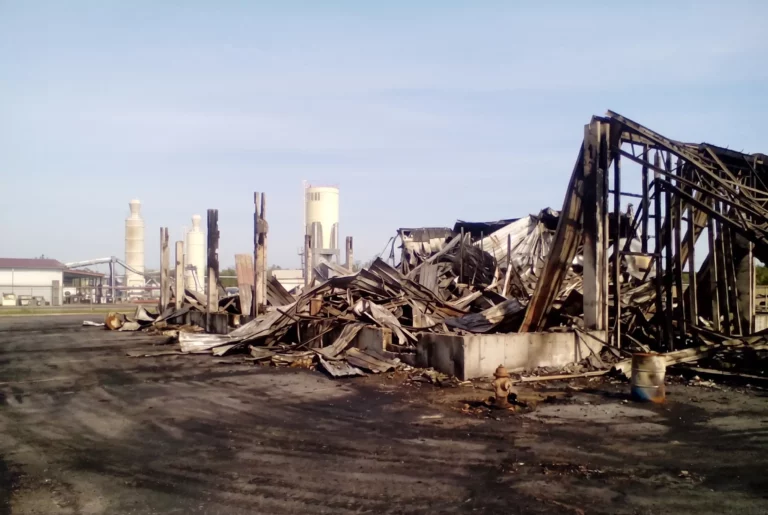
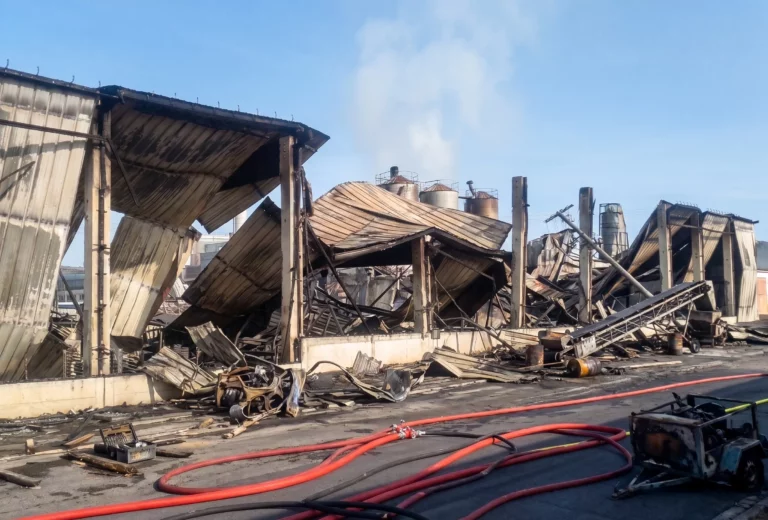
Consequences of explosions
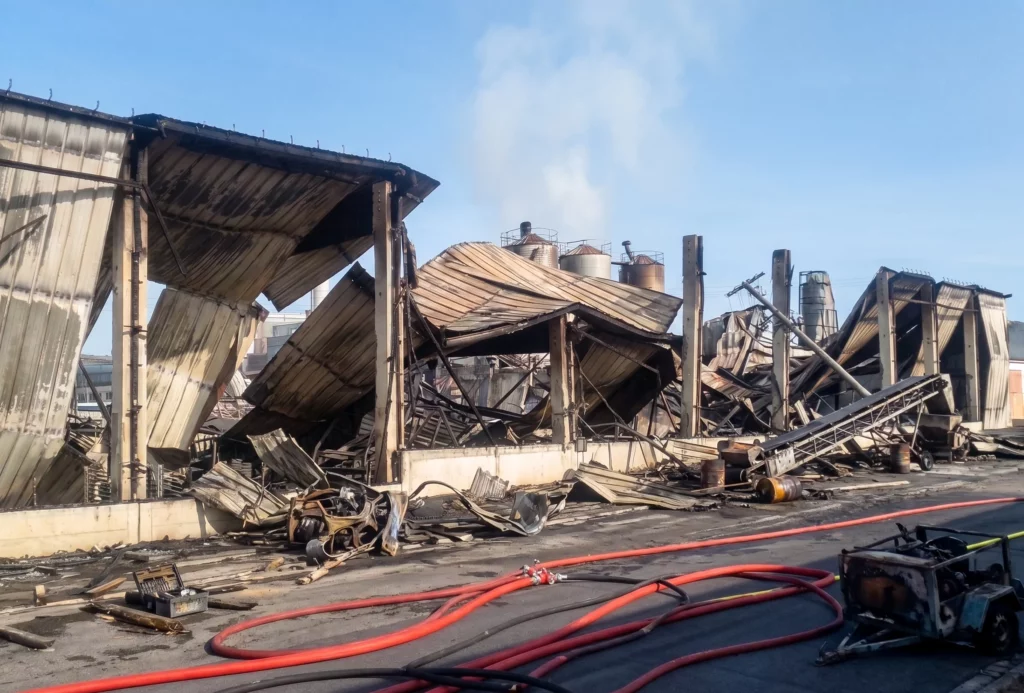
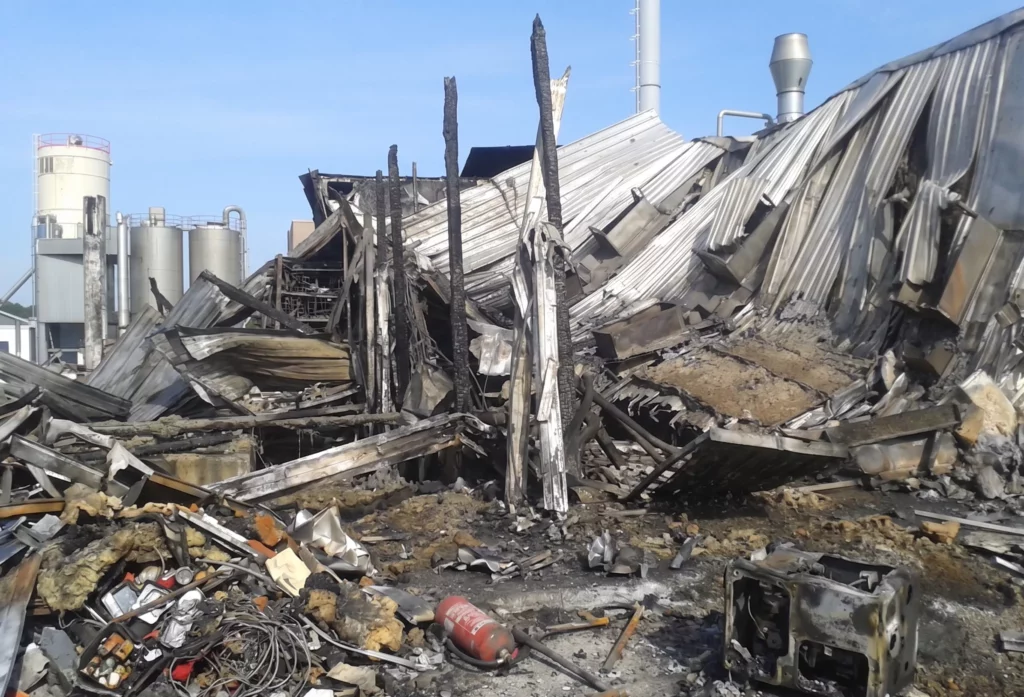
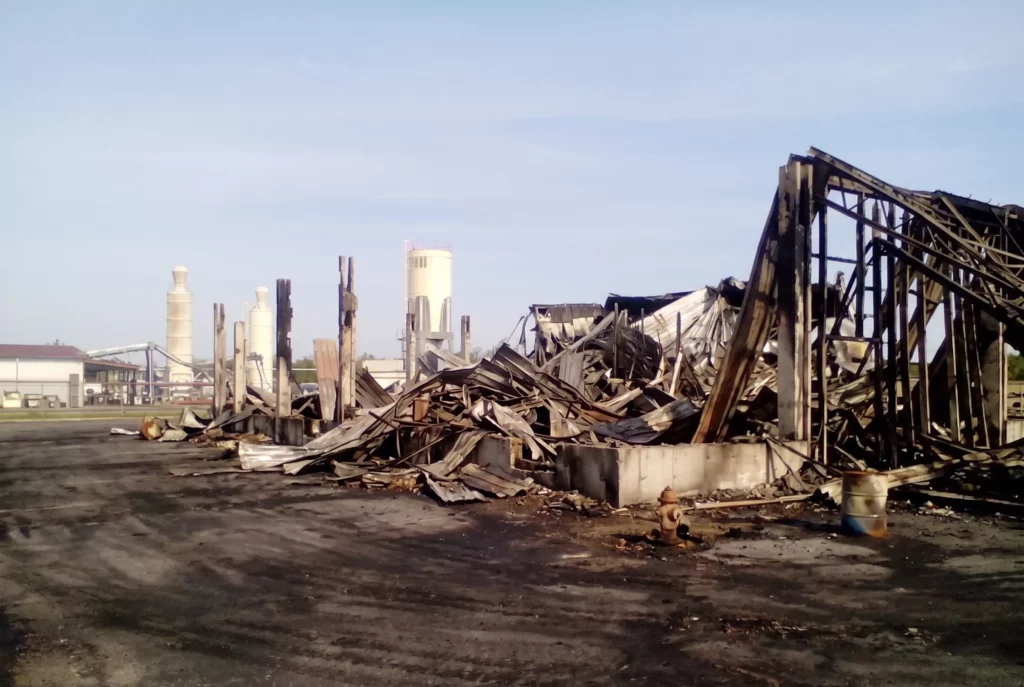
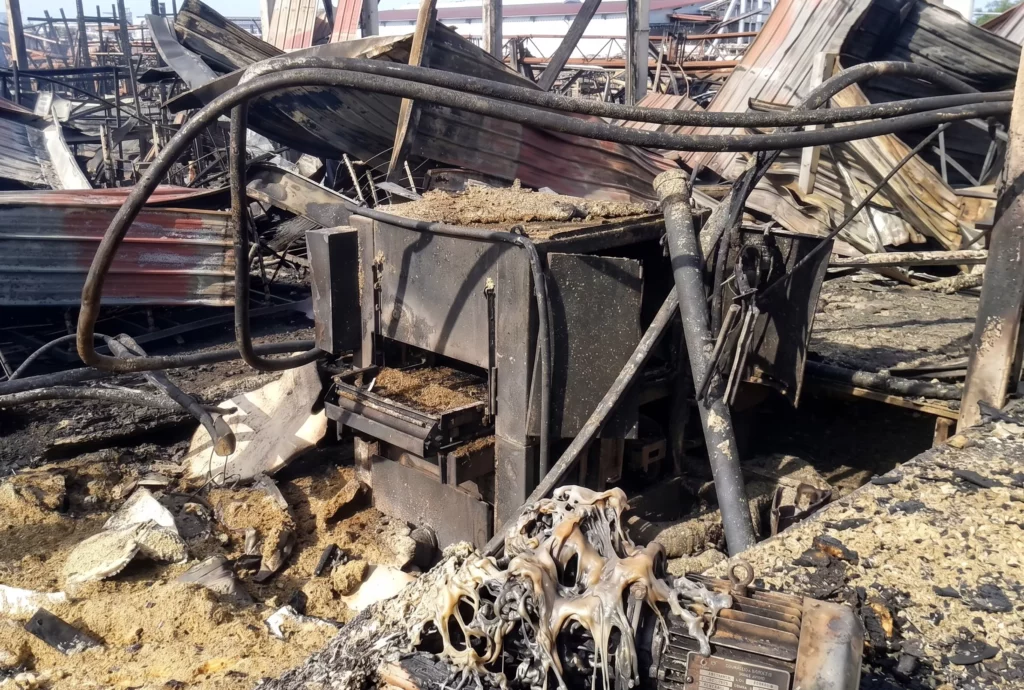
VST systems protect all equipment
Dust explosions cannot be entirely ruled out even in industries that do not directly fall into a risk category. Some stand-alone devices may also pose a real danger. These typically include mills, crushers, filters, classifiers, elevators, pneumatic conveying equipment, hoppers and silos, cyclones, and dryers.

Mills, Mixers, CrushersGrinding, Mixing and Crushing
Mills, crushers, grinders, rollers, mixers

ScreenersSeparation and Sorting
Screeners, classifiers, separators, sieves, cyclones

Storage and Drying
Silos, hoppers, scales, dryers

FiltrationFiltracja i aspiracja
Dust collectors / filters, cyclone filters, electrostatic filters, industrial vacuum cleaners, aspiration in general

ConveyingTransport
Screw conveyors, screw feeders, elevators, shaftless conveyors, pneumatic conveyors, chutes

Other
Mixers, kneaders, rotapulsers, scales, reactors…
We are proud to offer a highly sophisticated, state-of-the-art technology to secure your property, employees and brand name against dust explosion. Each solution is tailored to your specific industrial and economical needs. All systems are ATEX Certified and NFPA Compliant.
Contact us
We design and produce
our own safety systems to secure the devices and operations against dust explosion.
Protection Systems